
The books
Southern Cook Islands Customary Law, History and Society. Volumes One and Two set out the customary law before Christianity. Volume Three shows how the mission years changed it. Volume Four shows what the courts did with it after 1888.
E-books
The second editions of Volumes One, Two and Three, and the first edition of Volume Four, to read on a phone, tablet or computer.
NZ$34.50 a volume
NZ$30 plus GST. All four for NZ$115 (NZ$100 plus GST). Coming soon on Google Play.
See the four volumesThe printed set
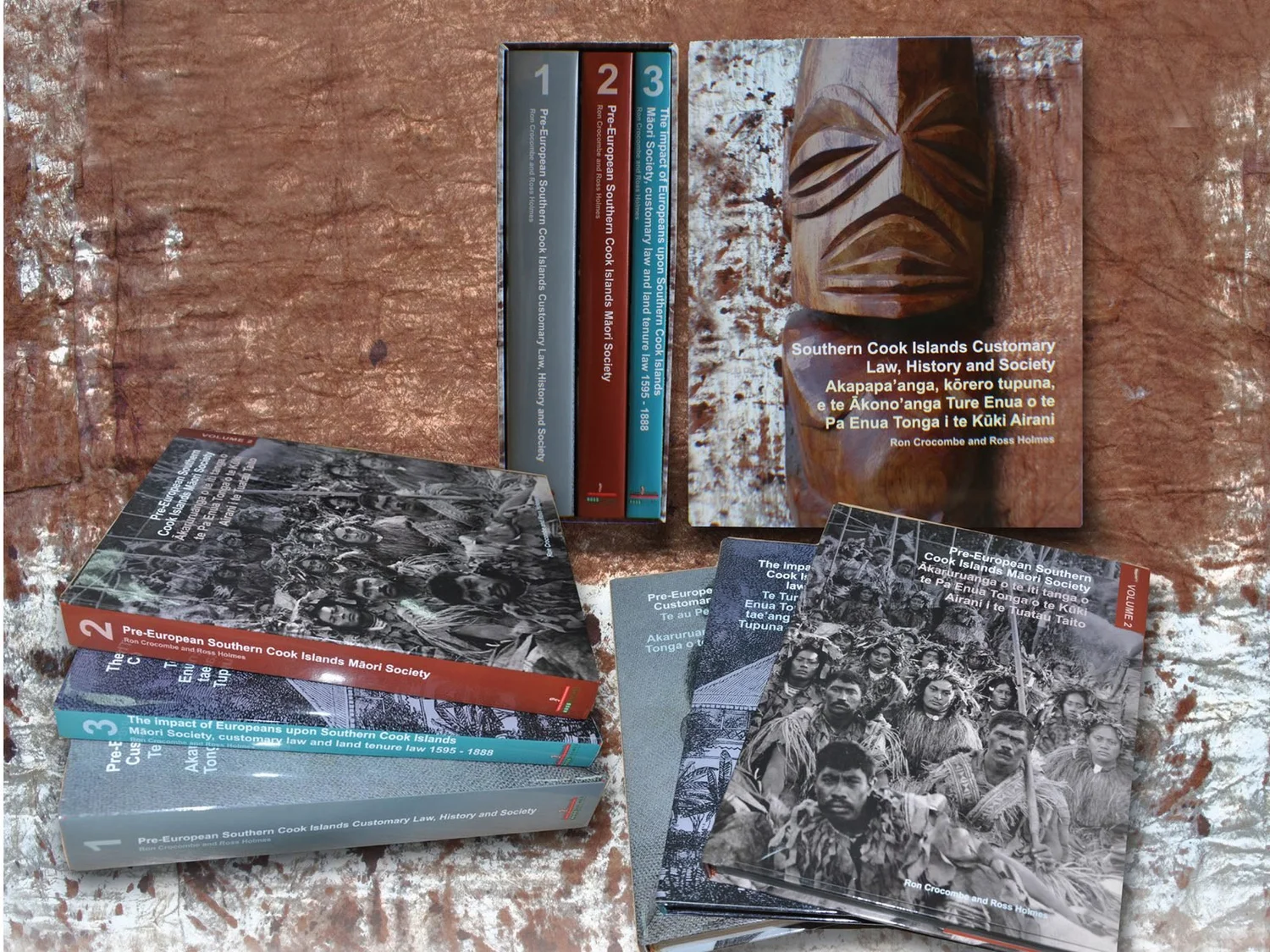
The hardcover first editions of Volumes One, Two and Three, as a set. Available now.
NZ$100 NZ$150
Opening special. Free courier in New Zealand, or collect in Rarotonga or Auckland.
Buy the printed setOn this page
The books, and how to read them
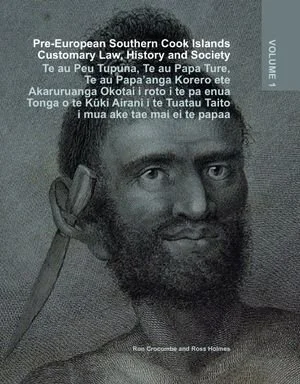
Volume One: Pre-European Southern Cook Islands Customary Law, History and SocietyTe au Peu Tupuna, Te au Papa Ture, Te au Papa‘anga Kōrero e te ‘Akaruruanga ‘Okota‘i i roto i te Pā ‘Enua Tonga o te Kūki ‘Airani i te Tuātau Ta‘ito i mua ake tae mai ei te papa‘ā
| Chapter | Title, in English and Cook Islands Māori | Preview or download |
|---|---|---|
| The whole volume, all chapters, as one PDF | Buy the volume NZ$57.50 | |
| Preface to Volumes One, Two and ThreeManuko Mua | Download (PDF) | |
| 1 | Introduction‘Akamārama‘anga | Download (PDF) |
| 2 | The evolution of, and sources of, material dealing with Southern Cook Islands customary law, history and societyTe akamata‘anga e te ngai i rauka mai ei te Papa korero e te peu tupuna o te Pa Enua Tonga o te Kūki Airani | Preview (PDF) |
| 3 | Southern Cook Islands oral traditionsTe au kōrero o te Pa Enua Tonga i te Kūki Airani | Preview (PDF) |
| 4 | The discovery and early settlement of the Southern Cook IslandsTe kitea‘anga e te no‘oia‘anga o te Pa Enua Tonga o te Kūki Airani | Preview (PDF) |
| 5 | The discovery and early settlement of RarotongaTua taito no te au tangata tei no‘o mua ki Tumu-te-varovaro | Preview (PDF) |
| 6 | Southern Cook Islands customary lawĀkono‘anga Pa Enua Tonga o te Kūki Airani | Preview (PDF) |
| 7 | The importance of customary lawsTe puapinga o te Ākono‘anga | Preview (PDF) |
| 8 | The acquisition of customary rights to landTe rauka’anga mai o te au tika’anga enua | Preview (PDF) |
| 9 | Conquest and warfare in the Southern Cook Islands before ChristianityTe au tuātau tamaki e te ‘ōnure‘au i mua ake ka tae mai ei te Evangelia | Preview (PDF) |
| 10 | Rights to landTe au tika‘anga ki te ‘enua | Preview (PDF) |
| 11 | The utilisation and role of land in the Southern Cook IslandsTe ta‘anga‘anga‘anga e te tūranga o te ‘enua i te Pā ‘Enua Tonga o te Kūki ‘Āirani | Preview (PDF) |
| 12 | Aitutakian customary lawĀkono‘anga Pa Enua Tonga o te Aitutaki | Preview (PDF) |
| 13 | Atiuan customary lawĀkono‘anga Pa Enua Tonga o te Atiu | Preview (PDF) |
| 14 | Mangaian customary lawĀkono‘anga Pa Enua Tonga o te Mangaia | Preview (PDF) |
| 15 | Ma‘ukean customary lawĀkono‘anga Pa Enua Tonga o te Ma‘uke | Preview (PDF) |
| 16 | Mitiaran customary lawĀkono‘anga Pa Enua Tonga o te Mitiaro | Preview (PDF) |
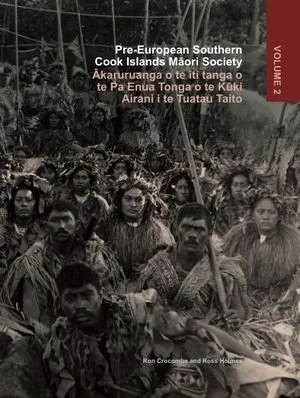
Volume Two: Pre-European Southern Cook Islands Māori Society‘Ākaruruanga o te iti tanga o te Pā ‘Enua Tonga o te Kūki ‘Airani i te Tuātau Ta‘ito
| Chapter | Title, in English and Cook Islands Māori | Preview or download |
|---|---|---|
| The whole volume, all chapters, as one PDF | Buy the volume NZ$57.50 (coming 9 November 2026) | |
| Preface to Volumes One, Two and ThreeManuko Mua | Download (PDF) | |
| 17 | The division of Rarotonga after Karika Tara‘ape and Tangi‘ia-nuiTe Ve‘e ia‘anga a Rarotonga i muri ake i te tuatau o Karika Tara‘ape e Tangi‘ia-nui | Preview (PDF) |
| 18 | Southern Cook Islands social stratificationAkapapa‘anga ta‘onga | Preview (PDF) |
| 19 | Pre-European Southern Cook Islands social organisationTūranga ora‘anga tangata i te tuatau taito | Preview (PDF) |
| 20 | Religion and gods in Southern Cook Islands societyTe au atua e te akono‘anga atua i te Pā ‘Enua Tonga | Preview (PDF) |
| 21 | The “fearful season” in Rarotonga, 1700 to 1823, Part 1Te tuatau mataku i Rarotonga, 1700 ki 1823, Tu‘anga 1 | Preview (PDF) |
| 22 | The “fearful season” in Rarotonga, 1700 to 1823, Part 2Te tuatau mataku i Rarotonga, 1700 ki 1823, Tu‘anga 2 | Preview (PDF) |
| 23 | The “fearful season” in Rarotonga, 1700 to 1823, Part 3Te tuatau mataku i Rarotonga, 1700 ki 1823, Tu‘anga 3 | Preview (PDF) |
| 24 | Succession to chiefly titles in the Southern Cook Islands, Part 1Te mono‘anga te taonga ‘Ariki i te Pā ’Enua Tonga, Tua 1 | Preview (PDF) |
| 25 | Succession to chiefly titles in the Southern Cook Islands, Part 2Te mono‘anga te taonga ‘Ariki i te Pā ’Enua Tonga, Tua 2 | Preview (PDF) |
| 26 | Succession to chiefly titles in the Southern Cook Islands, Part 3Te mono‘anga te taonga ‘Ariki i te Pā ’Enua Tonga, Tua 3 | Preview (PDF) |
| 27 | Rarotonga in 1823, before ChristianityRarotonga i te mata‘iti 1823, i mua ake i te Evangelia | Preview (PDF) |
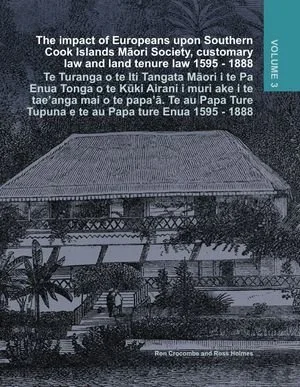
Volume Three: The Impact of Europeans upon Southern Cook Islands Māori Society, Customary Law and Land Tenure Law 1595-1888Te Turanga o te Iti Tangata Māori i te Pā ‘Enua Tonga o te Kūki ‘Airani i muri ake i te tae‘anga mai o te papa‘ā, e te au Papa Ture Tupuna e te au Papa Ture ‘Enua 1595-1888
| Chapter | Title, in English and Cook Islands Māori | Preview or download |
|---|---|---|
| The whole volume, all chapters, as one PDF | Buy the volume NZ$57.50 (coming 1 December 2026) | |
| Preface to Volumes One, Two and ThreeManuko Mua | Download (PDF) | |
| 28 | The first Europeans to visit the Southern Cook IslandsTe au Papa‘ā mua ki te Pā ’Enua Tonga | Preview (PDF) |
| 29 | The Mission era, 1822 to 1888Te tuatau Evangelia, 1822 ki 1888 | Preview (PDF) |
| 30 | The impact of the Mission era upon Southern Cook Islands customary law, history and society, 1822 to 1888Te tuatau Evangelia, e tana akatūkē‘anga i te ture peu tupuna, te kōrero tupuna e te orā‘anga o te Pā ‘Enua Tonga | Preview (PDF) |
| 31 | The acquisition of land by the ariki of Rarotonga in the Mission period, 1823 to 1888Te rauka‘anga mai o te ‘enua ki te au ariki o Rarotonga i te tuatau Evangelia | Preview (PDF) |
Volume Four: Silenced Custom. The impact of the New Zealand Colonial era on Southern Cook Islands Customary Law, History and SocietyTe Ākono‘anga Tupuna tei ‘Akamū‘ia. Te tupu‘anga mai o te Tuatau ‘Au Niu Tireni ki runga i te Akapapa‘anga, Kōrero Tupuna, e te Ākono‘anga Ture ‘Enua o te Pā ‘Enua Tonga i te Kūki ‘Airani
| Chapter | Title, in English and Cook Islands Māori | Preview or download |
|---|---|---|
| The whole volume, all chapters, as one PDF | Coming January 2027 | |
| Preface: The silenced customManuko Mua | Download (PDF) | |
| 1 | The dream of a South Pacific empireTe moemoeā nō tēta‘i patireia i te Pa ‘Enua Tonga | Preview (PDF) |
| 2 | The bureaucratic cleansing of the landTe tāmā‘anga a te kavamani i te ’enua | Preview (PDF) |
| 3 | The shadow of the protectorateTe ata o te paruru‘anga Peritāne | Coming January 2027 |
| 4 | The iron fist of the British ResidentTe rima ’auri o te ‘Akava nui Peritāne | Coming January 2027 |
| 5 | The annexationTe ’apai‘anga ki raro ake i a Nū Tīreni | Coming January 2027 |
| 6 | The iron hand of the Resident CommissionerTe rima ’auri o te ‘Aka‘aere o te ‘Akava nui Peritāne | Coming January 2027 |
| 7 | The Land Titles Court arrivesTe tae‘anga mai o te ‘Akavā‘anga ‘Enua | Coming January 2027 |
| 8 | The Tākitumu Court decisionsTe au tuku‘anga tika a te ’akava‘anga no te enua i Tākitumu | Coming January 2027 |
| 9 | The Avarua Court decisionsTe au tuku‘anga tika a te ’akava‘anga no te enua i Avarua | Coming January 2027 |
| 10 | How the ariki of Rarotonga acquired land in the colonial periodTe rauka‘anga mai o te ’enua ki te au ariki o Rarotonga i te tuatau ‘au papa‘ā | Coming January 2027 |
| 11 | The Cook Islands Act 1915 and afterTe Ture o te Kūki ‘Airani mei te mataiti 1915 e aera uatau | Coming January 2027 |
| 12 | Southern Cook Islands customary lawĀkono‘anga Pa Enua Tonga o te Kūki Airani | Preview (PDF) |
| 13 | Did the Land Court work?Kua anga‘anga ainei te ’Akavā‘anga ’Enua? | Coming January 2027 |
| 14 | What Ron Crocombe proposedTā Ron Crocombe i tuku mai | Coming January 2027 |
| 15 | ConclusionsTe au ’akaoti‘anga | Coming January 2027 |
The new chapter format
Every chapter of the second editions is built in the same three tiers, so that a reader who wants the story can read it without interruption, and a reader who wants the evidence can find every piece of it.
1. The chapter
Written to be read, as a story. Each chapter says on its opening page that it is the second edition of September 2026, so it cannot be mistaken for the first.
2. The notes and tables
At the end of the chapter, every step of the argument carries a numbered note, such as 18.1, giving its source and the page where the passage stood in the first edition. The genealogies, lists and comparisons are printed complete in tables.
3. The archive
Online, one for each chapter. It holds the whole first-edition chapter, the table matching the new notes to the old pages, the documents the chapter quotes, printed whole, and Ron Crocombe’s comments that bear on it. The QR code at the end of each chapter leads there.
The longest chapters, in parts
Chapters 18 and 19 of Volume Two, and Chapters 25 and 26 of Volume Three, are each the length of a short book. Each is now one chapter in three parts. A short passage before Part One says what the parts are and why. Each part has its own notes and its own archive, so a reader can take it on its own, like a separate book.
Within each part, the evidence is set out so the reader can see it before reading it. Each part opens with a list of the people who appear in it and a chart or a map: a family tree of the title, a chart of how each holder came to it, or a map of the island with the places marked. Each section is headed by the question it answers, and opens with the answer in a sentence. Each part closes with the evidence in tables, witness by witness.
Every chapter rewritten
The first editions were written for lawyers and scholars, and quoted their sources in full in the text. Every chapter of the second editions has been rewritten to be read by everyone, on the model of Michael King’s Penguin History of New Zealand: rigorous history told as a story, in plain English, and fair to every side. The test is whether a grandmother in Tupapa, a teenager in Ōtara and a judge in Avarua can all read it without stopping.
In practice that means:
- Short, active sentences, with one idea to a sentence where possible, and no legal or academic jargon in the story.
- The argument told once, with the people who made the history and the people who gave the evidence at the front of it.
- Cook Islands Māori words used where they are the right words, with the sentence around them saying what they mean.
- Every tradition printed in full, in Cook Islands Māori and in English where both were recorded, and credited to the family that told it.
- Every genealogy from the first edition printed complete, as a table.
- Quotations that correct a long-held mistaken view kept whole in the text.
- Every side’s case put at its strongest before it is answered, and no scolding: the documents do the work.
- Everyone named in full the first time, and every judge given the title he held.
- One name for each person and each place, and the same words for the same thing in every volume: customary law for the law of the people before the courts came, and invented tradition for a story made to support a claim.
- Section numbers, minute-book references and case citations kept out of the story and put in the notes.
Nothing has been dropped. The full quotations and sources have been moved to the chapter archives.
What others have said
Reviewed
The first editions were reviewed in The Contemporary Pacific, published by the University of Hawai‘i Press, volume 29, number 1 (2017).
The reviewCited
The series is listed among the legal reference works on the Cook Islands in the Law Library of Congress’s Guide to Law Online, and is cited in The Journal of Pacific History.
Opening special
The printed set, Volumes One to Three
The hardcover first editions of 2014 and 2015: three volumes, 1,280 full-colour pages, in a slipcase, designed by Trevor Newman. The second editions are, for now, e-books only.
- New Zealand
- Free courier to any address.
- Collect in Rarotonga
- Free, from Kia Orana Villas.
- Collect in Auckland
- Free, from Ross Holmes Virtual Lawyers Limited.
- Everywhere else
- Courier at cost, including the outer islands of the Cook Islands. The charge is shown at checkout.
Register your interest
Would you like the e-books, the printed second editions, printed Volume Four, or access for a library, school or court? Send us a message and we will write to you when it is ready.
Or write to rossholmes@rossholmes.co.nz
Questions
Why are the e-book prices shown with GST?
A volume is NZ$50 and a chapter NZ$10, plus GST. New Zealand law requires prices for consumers to be shown with GST included, so the price you see and pay is NZ$57.50 a volume and NZ$11.50 a chapter.
When will the e-books be ready?
Each chapter goes on sale when its second edition is finished; the chapter list above shows which can be bought now.
How do I buy and read an e-book?
Buy the chapter or the volume in the shop on this site. When you have paid you receive a link to download the PDF, which you can read on any phone, tablet or computer with a PDF reader.
What does “read-only” mean?
You can read the PDF on any of your devices and print it for your own use. It cannot be edited, and its text cannot be copied out. The books are copyright, so please do not pass the file on to others.
Are the printed books the second edition?
No. The printed set is the hardcover first edition of Volumes One, Two and Three, published in 2014 and 2015. Printed second editions, and a printed Volume Four, are planned. What the second editions change is listed on Corrections and additions.
How is the printed set delivered?
Free by courier anywhere in New Zealand. You can also collect it free from Kia Orana Villas in Rarotonga, or from Ross Holmes Virtual Lawyers Limited in Auckland. Anywhere else, including the outer islands of the Cook Islands, it goes by courier at cost, and the charge is shown at checkout before you pay.
Do I need to buy the books to use the law reports and the research library?
No. The law reports, the manuscripts and the volume archives are free to everyone. The books tell the story; the library holds the evidence.
We are a library, school or court. Can we buy access for our users?
Yes. Write to us and we will arrange it.
What if something goes wrong with my order?
If a download does not work, or a book is not what you ordered, write to us and we will put it right. See delivery, refunds and privacy.
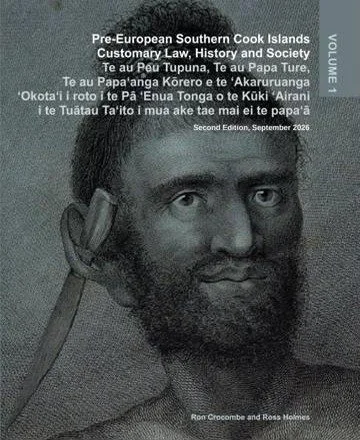
Volume One, second edition, November 2026
Pre-European Southern Cook Islands Customary Law, History and Society
Te au Peu Tupuna, Te au Papa Ture, Te au Papa‘anga Kōrero e te ‘Akaruruanga ‘Okota‘i i roto i te Pā ‘Enua Tonga o te Kūki ‘Airani i te Tuātau Ta‘ito i mua ake tae mai ei te papa‘ā
How the islands were found and settled; what oral tradition, the written sources and the courts’ records can and cannot tell us; how rights to land were acquired, held, used and lost; and what conquest did to them. Then Aitutaki, Atiu, Mangaia, Ma‘uke and Mitiaro, one chapter each, because each island had a law of its own.
More about Volume One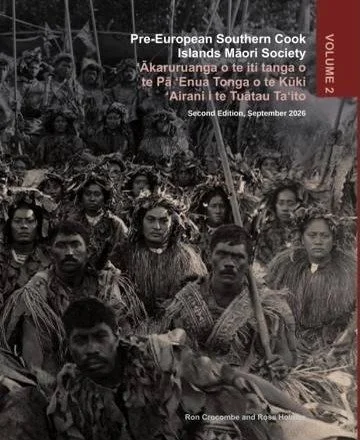
Volume Two, second edition (coming 9 November 2026)
Pre-European Southern Cook Islands Māori Society
‘Ākaruruanga o te iti tangata o te Pā ‘Enua Tonga o te Kūki ‘Airani i te Tuātau Ta‘ito
Rarotonga from the coming of Karika Tara‘ape and Tangi‘ia-nui, about 1250, to 1823, the year Christianity arrived: who held the land and the titles, by what law, and how we know. The traditions are printed in full, and each is credited to the family that told it.
More about Volume Two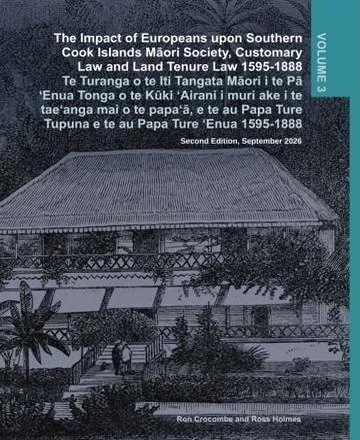
Volume Three, second edition (coming 1 December 2026)
The Impact of Europeans upon Southern Cook Islands Māori Society, Customary Law and Land Tenure Law 1595–1888
Te Turanga o te Iti Tangata Māori i te Pā ‘Enua Tonga o te Kūki ‘Airani i muri ake i te tae‘anga mai o te papa‘ā, e te au Papa Ture Tupuna e te au Papa Ture ‘Enua 1595–1888
From the first European sail in 1595 to the Protectorate of 1888. How the London Missionary Society came to each island from 1821, and how, by 1888, the ariki of Rarotonga held a power and a quantity of land no ariki had held in 1823, which the courts would later treat as customary law.
More about Volume Three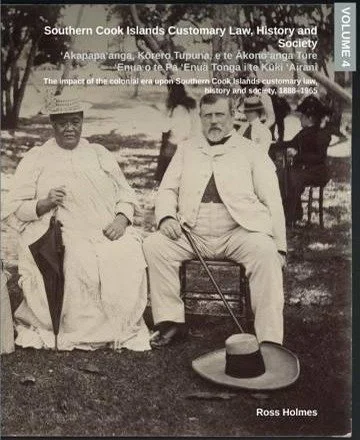
Volume Four (coming January 2027)
Silenced Custom. The impact of the New Zealand Colonial era on Southern Cook Islands Customary Law, History and Society
Te Ākono‘anga Tupuna tei ‘Akamū‘ia. Te tupu‘anga mai o te Tuatau ‘Au Niu Tireni ki runga i te Akapapa‘anga, Kōrero Tupuna, e te Ākono‘anga Ture ‘Enua o te Pā ‘Enua Tonga i te Kūki ‘Airani
For more than sixty years there has been a silence at the centre of Cook Islands customary law. This volume traces, decision by decision, what the Land Titles Court did from 1902, and measures it against the law it replaced. It is written without rancour: its purpose is not to condemn the judges but to supply what they lacked.
More about Volume FourBooks / Changes and additions
Corrections and additions
The second editions of Volumes One, Two and Three, of September 2026, supersede the first editions of 2014 and 2015 where the two differ. This page says what changed and why, so that anyone who owns or cites the printed set knows.
Citing the first edition? Each chapter archive prints the whole of the first-edition chapter, with a table matching the notes of the new edition to the pages of the first, so every change can be seen.